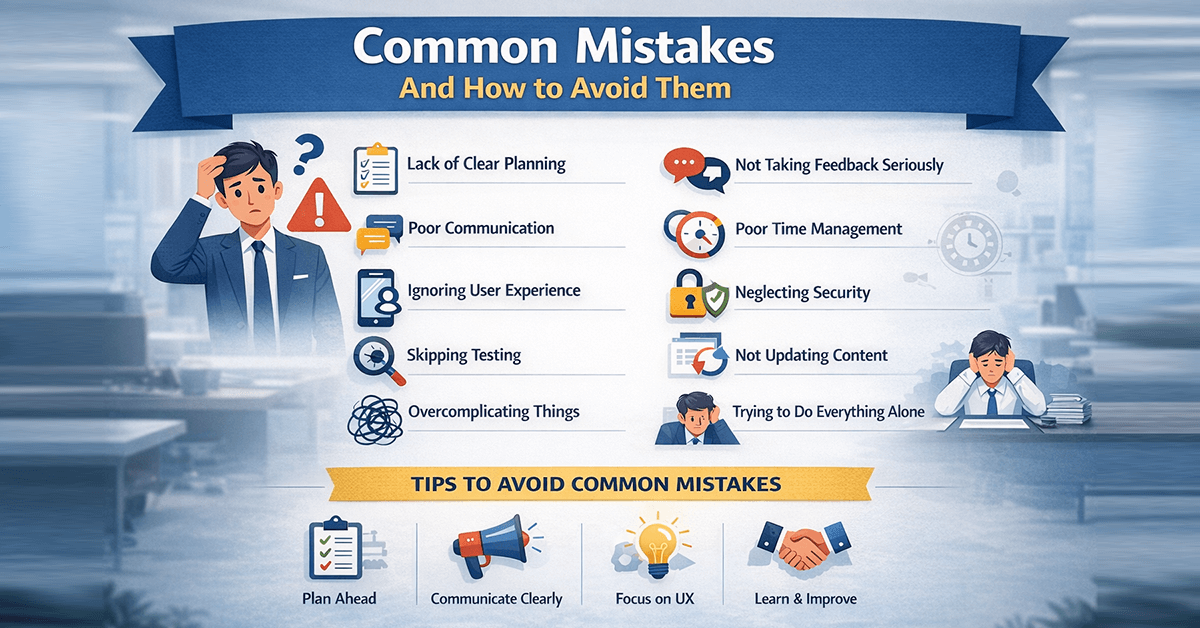
Mistakes are not failures — they are feedback. Every professional journey, whether individual or organizational, is shaped by lessons learned along the way. However, while some mistakes are part of growth, many are predictable and preventable. Recognizing these common pitfalls can help save time, protect credibility, and improve overall performance.
Let’s explore some of the most frequent mistakes and practical ways to avoid them.
Starting Without Clear Goals
One of the most common mistakes is beginning a project without clearly defined objectives. When goals are vague, teams often struggle with confusion, shifting priorities, and inconsistent outcomes.
Clarity creates direction. Before starting any initiative, define specific and measurable goals. Align all stakeholders on expectations and document the desired outcomes. A well-defined goal acts as a compass, ensuring everyone moves in the same direction.
Underestimating the Power of Communication
Many challenges arise not from incompetence but from miscommunication. Assumptions, unclear instructions, and irregular updates can create misunderstandings that affect timelines and relationships.
Strong communication builds trust. Establish clear channels, provide regular updates, and encourage open dialogue. Listening is just as important as speaking — feedback often reveals blind spots before they become major issues.
Skipping Proper Planning
In fast-paced environments, there is often pressure to act quickly. While speed is valuable, rushing without planning can lead to costly mistakes.
Effective planning includes understanding risks, allocating resources wisely, and setting realistic timelines. Breaking work into manageable milestones makes complex projects more achievable. A thoughtful plan does not slow you down — it helps you move forward confidently.
Overpromising and Underdelivering
The desire to impress clients, leaders, or stakeholders can sometimes lead to unrealistic commitments. When expectations are not met, credibility suffers.
It is always better to set achievable targets and exceed them than to promise more than can be delivered. Honest conversations about timelines, limitations, and risks build long-term trust and stronger professional relationships.
Resisting Feedback
Feedback is often perceived as criticism, which can create defensiveness. However, avoiding feedback prevents improvement.
Constructive feedback provides valuable insights into performance gaps and growth opportunities. Creating a culture where feedback is welcomed — not feared — encourages continuous development. Reflection turns mistakes into stepping stones.
Failing to Adapt
Change is constant. Markets evolve, technologies advance, and customer expectations shift. Sticking rigidly to outdated strategies can hinder progress.
Adaptability is a strength. Regularly reviewing results and being willing to adjust strategies ensures resilience. Flexibility allows individuals and organizations to stay relevant and competitive.
Neglecting Continuous Learning
In a rapidly evolving world, standing still is equivalent to falling behind. Relying solely on past knowledge can limit growth.
Investing in learning — whether through training, research, or knowledge sharing — keeps skills sharp and ideas fresh. A learning mindset fosters innovation and long-term success.
Conclusion
Mistakes are inevitable, but repeating avoidable mistakes is not. The difference between stagnation and progress lies in awareness and action. By setting clear goals, communicating effectively, planning thoughtfully, managing expectations, embracing feedback, adapting to change, and committing to continuous learning, professionals can turn challenges into opportunities.
Success is not about avoiding every mistake — it is about learning quickly, improving consistently, and moving forward with greater wisdom each time.